
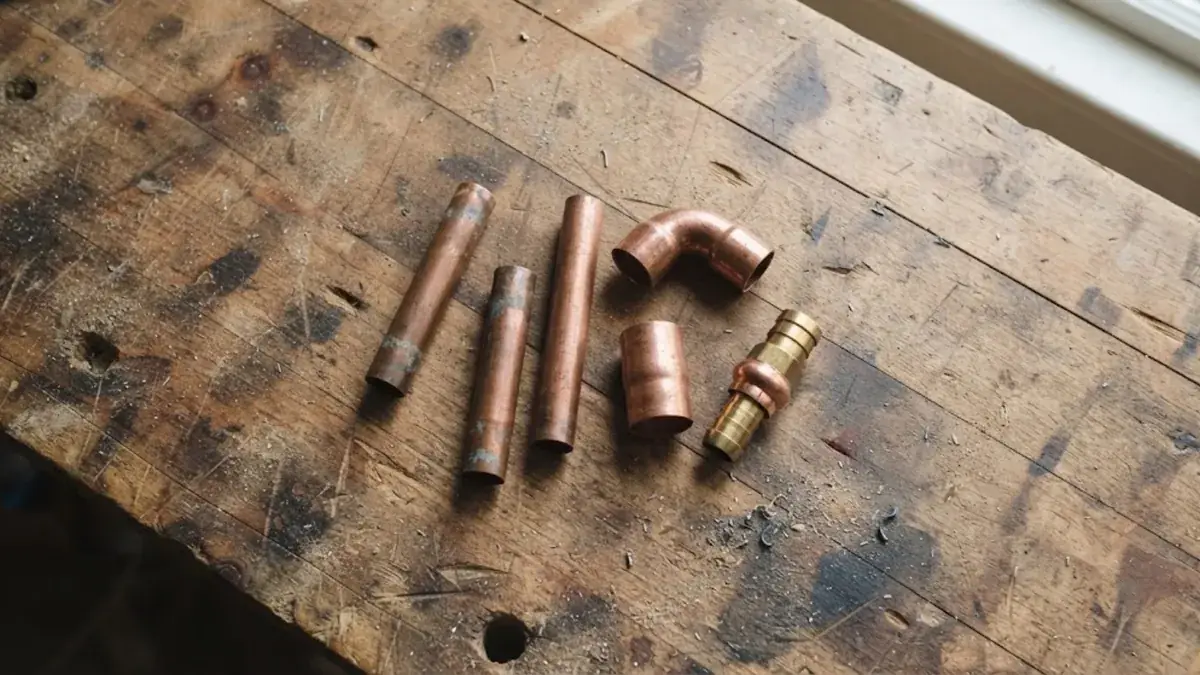
The pipes that connect to a water heater are the most stressed in the house. They carry the hottest water, flex when the tank heats and cools and often join different metals. Green crust, white scale and a slow drip at a fitting are the usual early signs, and a pinhole in a connecting pipe can flood a basement.
This guide covers why these pipes fail, what a replacement involves and what Salem's published water results say about copper. For the whole unit, our water heater repair page describes what else may need attention.
Causes.
Why pipes at the heater corrode.
| Cause | What happens | How it is prevented |
|---|---|---|
| Galvanic corrosion. | Copper touching a steel tank fitting corrodes the steel and the joint leaks. | Dielectric nipples or unions. |
| Heat cycling. | Pipes expand and contract, fatigue joints. | Flexible connectors or expansion allowance. |
| Water chemistry. | Aggressive water pits copper from inside. | Water treatment and corrosion control by the utility. |
| Poor soldering or flux residue. | Joint leaks or corrodes. | Clean joints, lead-free solder, flux wiped off. |
| Vibration and movement. | Fittings loosen. | Proper support, no stress on connections. |
Galvanized steel nipples that came with the tank are the classic weak link. A copper pipe screwed directly into one corrodes the steel quickly. A dielectric nipple or a union with a plastic liner separates the metals and slows that process.
Steps.
How replacement works.
Shut off water and power.
Close the cold supply, switch off power or gas and open a hot tap. Drain the tank below the connections.
.Cut out the bad section.
Use a tubing cutter on copper. For threaded pipe, unscrew the old nipples from the heater.
.Install new connectors.
Fit dielectric nipples or flexible connectors on the heater fittings, with sealant on threaded joints.
.Sweat or connect the pipe.
Join new copper with lead-free solder, or use approved push-fit fittings where permitted. Keep heat away from plastic liners and valves.
.Check the relief valve and discharge.
The temperature and pressure relief valve discharge line should be copper or approved piping and run to a safe, visible location.
.Refill, vent and test.
Fill the tank with a hot tap open, check every joint, then restore power or gas.
.
Gas and soldering.
If the pipe sits close to a gas line or flue, or you are uncomfortable with a torch near a wooden joist, call a plumber. Soldering inside a closet is a fire risk.
Warning signs.
Signs your heater connections need attention.
- Green or white crust on a fitting, which means a slow weep.
- A damp spot on the floor under the pipes that returns after wiping.
- Rust streaks on a galvanized nipple at the tank top.
- A hissing or ticking noise when the heater cycles.
Water quality.
What Salem's test results say about copper.
The Salem and Beverly Water Supply Board's water quality report lists the results of its copper and lead sampling. In the 2023 round, the 90th percentile copper level was 0.16 parts per million for Salem, well below the action level of 1.3 parts per million, and the lead level was 1.5 parts per billion for Salem against an action level of 15. The Board adjusts pH and adds a phosphate to reduce the amount of lead and copper that dissolves from household plumbing.
Those numbers describe the system's sampling, not your pipe. A home with old galvanized or lead-containing fittings can still have problems. If you are concerned about lead in your own plumbing, ask the Board about testing. The report lists a Salem lead service line phone number, 978-619-5673.
Older Salem houses and mixed metal.
Many Salem houses have had water heaters replaced several times, and each time pipes were cut back and rejoined with whatever was available. That is how you end up with copper joined to galvanized, brass and sometimes plastic in one short run. A replacement that brings the whole connection to a consistent material, with dielectric protection, tends to last far longer.
Permits for plumbing work in Salem are filed through Inspectional Services, and the office, at 978-619-5641, can say whether a like-for-like replacement needs one.
If the heater itself is near the end of its life, replacing it at the same time is often more economical. For wider pipe problems, see repiping. We serve Beverly too.
Safety.
What to do and what the code says.
- Turn off the power or gas to the heater and close the cold water valve before any work.
- Let the water cool, since the lines at the heater can scald.
- Do not mix galvanized or steel nipples with copper without a dielectric fitting, according to common practice under 248 CMR 10.00.
Questions.
Water heater pipe questions from Salem homeowners.
It is copper corrosion, often from a leak or a galvanic reaction. Have the joint checked.
A fitting with a plastic or special lining that keeps copper and steel from touching, which slows galvanic corrosion.
Yes, many installations do. They absorb movement, but they have a limited life and should be checked.
The Salem and Beverly Water Supply Board's 2023 sampling showed copper well below the action level. Your own plumbing condition still matters.
If a joint is leaking, if galvanized pipe is involved or if you are not comfortable soldering near a gas appliance.