
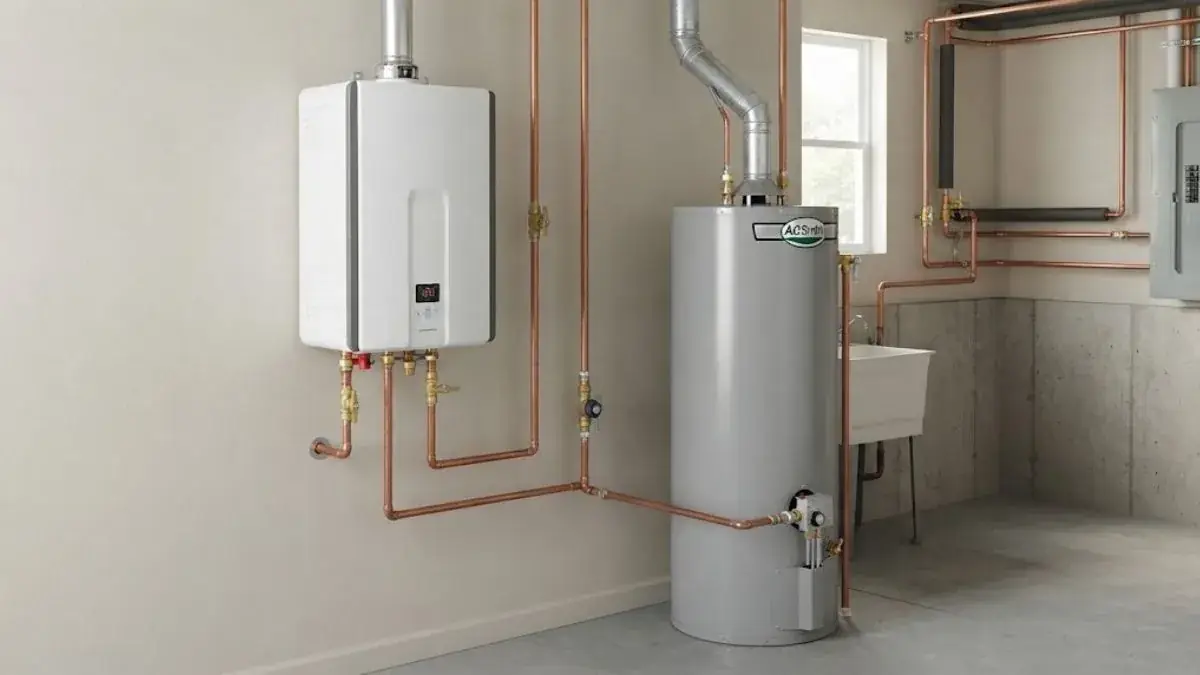
Tankless units are small, which makes a closet look like a natural home. The catch is that gas models burn fuel, need a vent and combustion air, and put out heat. A closet that suits an electric unit may not suit a gas one, and many closets need changes before they can host either.
This guide covers the main requirements. A site check with a plumber turns it into a firm answer. For comparing a tankless with the tank it would replace, see water heater installation and our tankless water heater page.
Fuel choice.
Gas or electric: the closet changes the answer.
| Question | Gas tankless | Electric tankless |
|---|---|---|
| Needs a vent. | Yes, direct vent through a wall or roof. | No. |
| Combustion air. | Yes, from outside for sealed units. | No. |
| Condensate drain. | Yes, for condensing models. | No. |
| Electrical demand. | Small, controls and fan. | Very large, often multiple heavy circuits. |
| Closet suitability. | Possible with a vent path. | Often practical if the panel can support it. |
Electric models avoid the vent but may need a service upgrade, since a whole-house unit can draw more power than many older panels can supply. In older Salem houses with 100 amp service, that can rule it out. A gas model keeps the electrical load small but needs the vent path and enough gas.
Requirements.
What a closet must provide.
Clearance.
Manufacturers specify clearances to walls and doors, and service access in front. A closet door that closes against the unit does not meet them.
Venting.
A sealed combustion unit needs a path through the closet wall or ceiling to the outside, with correct pipe, slope and termination distance.
Combustion air.
Direct-vent models draw air through a second pipe. Others need louvers or ducts sized by the manufacturer.
Gas supply.
A larger gas pipe and a proper shutoff and sediment trap are usually required.
Drain and relief.
A condensing unit needs a condensate drain to a floor drain or neutralizer, and every unit needs a relief valve discharge.
Service access.
The unit must be reachable to flush it every year, and the filter has to be accessible.
Carbon monoxide.
Any gas appliance in or near living space needs a working carbon monoxide alarm nearby. Installed correctly, a sealed combustion unit is safe. A poorly vented one is not.
Self-check.
A quick closet checklist before you call.
- Measure the closet width, depth and height, and note where the door swings.
- Photograph the existing gas meter, the water heater and any chimney or flue.
- Check the electrical panel for open slots and its amp rating.
- Look for an exterior wall near the closet where a vent could terminate.
- Note whether the closet shares a wall with a bedroom.
A plumber can read most of the answer from those five items. If the closet is on an interior wall with no path to the outside, a gas tankless may be impractical and an electric model, a tank or a different location may be the better route. It is better to learn that on a site visit than after a unit has been bought.
Livability.
Noise, heat and moisture.
A tankless unit is quieter than a tank burner but has a fan and a combustion hum. A closet shared with a bedroom wall may carry that noise. Heat from the vent and the unit also needs space. Do not store cardboard, cleaning products or paint in the closet, and keep it clear for service.
Moisture matters too. A leak at a service valve or a condensate line can run into a closet floor unnoticed. A shallow pan with a drain, or a water leak sensor, gives early warning.
Permits and older Salem houses.
Salem issues plumbing and gas permits through Inspectional Services, and both are relevant to a gas tankless install. The city's permit pages describe an online filing process, and the office can be reached at 978-619-5641. A gas permit is separate from a plumbing permit, so ask your plumber which will be filed.
Many Salem houses are narrow and have small closets, or chimney flues that serve a boiler. A tankless unit can leave a boiler chimney oversized, which changes how the boiler vents. A plumber should check both before the old heater is removed. The boiler repair page explains why boilers and chimneys matter.
Our plumbers also serve Beverly and nearby towns for site checks and installs.
Standards.
Code and clearance notes.
Clearances, venting and combustion air for a tankless unit are set by the manufacturer's installation instructions and by the Massachusetts fuel gas code. Follow those standards rather than a rule of thumb, and ask Salem Inspectional Services at 978-619-5641 whether a permit and inspection apply to your closet.
Questions.
Tankless closet questions from Salem homeowners.
Often, if the closet has the clearances, a vent path, combustion air and gas supply that the manufacturer requires.
It needs no vent, but it needs a lot of electrical capacity, and an older panel may not support it.
A condensing gas model does, for condensate. All units need a relief valve discharge.
A tankless unit hums and has a fan. A bedroom wall nearby may carry the sound.
In Salem, plumbing and gas permits are filed through Inspectional Services. Your plumber can explain which apply.